Mirklurk: Every Step Matters Exploring The Mirk
Read every tile, budget every slope, and bring a night plan before you chase the next ruin.
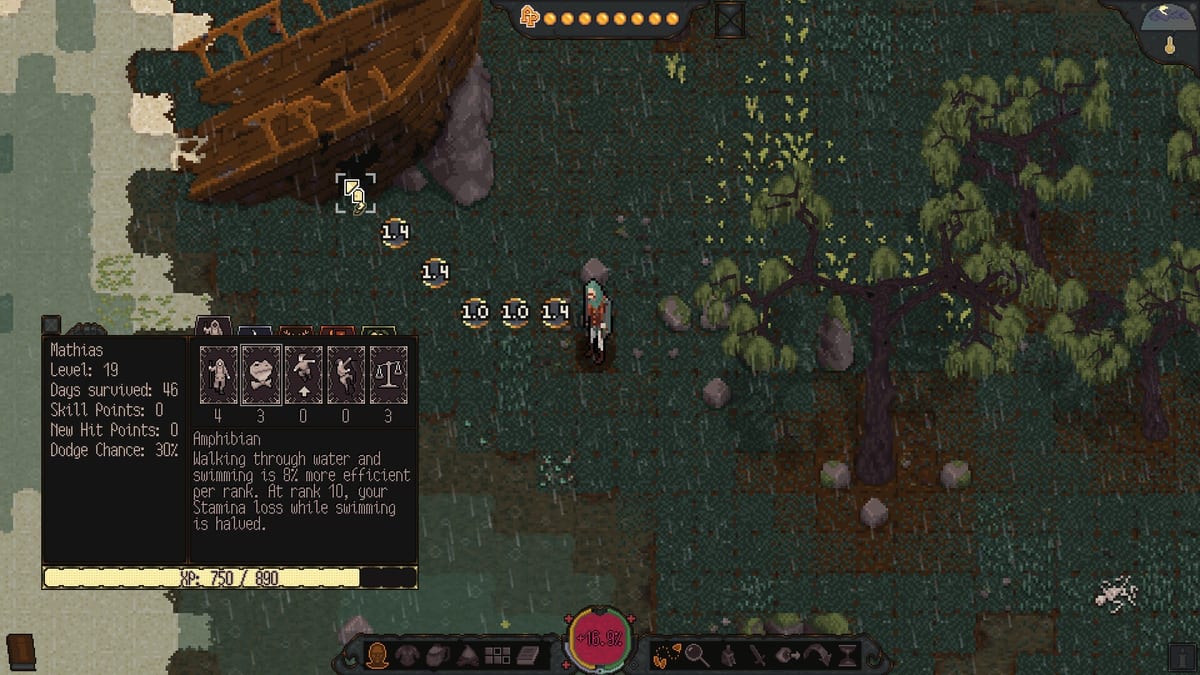
Exploration in Mirklurk: Every Step Matters is not tourism. The Mirk mixes procedural swamp with handcrafted anchors—ruins, cracks, dungeons, ranger camps, and strange rift samples—so every march is a bet against Hunger, Focus, Energy, Warmth, and your eight AP per turn. This guide teaches you how to examine tiles properly, loot without overextending, path around expensive slopes, and decide when night exploration is a calculated risk versus a wipe.
The embedded Splattercat-style first look on this page is exploration-heavy footage you can use for pacing reference. Pair habits here with Survival, Camping, Combat, and Controls for scouting and aiming. Early loops live in Getting Started and Early Game Tips.
Examine before you assume
Many valuable interactions hide behind examining a tile or object rather than walking past it. Cracks in stone, odd mud banks, ruined walls, and camp leftovers reward players who stop and look. Rushing tile-to-tile with leftover AP “because it was free” is how you miss permanent chest logic unlocked in later content, herb nodes, or story breadcrumbs.
Examination habits:
- Spend a beat inspecting anything that looks broken, glittery, or out of place.
- Keep inventory space for awkward loot—samples, keys, wet wood you will dry later.
- Mark mental waypoints: water edge, tree cover cluster, trader direction, dungeon mouth.
- If Focus is already low, examine less greedily; accidents and missed reads climb when tired.
Exploration skill progression reduces wasted AP on dead ends, but curiosity still needs meter surplus. A forager-leaning kit from the Forager build often funds longer survey loops than a pure steel warrior loadout.
Ruins, cracks, and surface loot
Surface ruins and cracks are the swamp’s snack drawer. Expect scrap, food scraps, crafting bits, and occasional rarer finds. Treat them as daylight content when possible: you want AP left to return under tree cover, not a heroic corpse beside an empty crack.
Loot discipline:
- Clear a small radius around a known safe camp first.
- Pull only what you can cook, dry, or stash before dusk.
- Leave a deliberate return path with slope costs counted.
- Use permanent chests (expanded from patch 0.9.0.0 onward into 1.0) as long-term banks so you are not fighting while over-encumbered.
If a ruin sits next to predator habitat, read the fight before the crack. Grid combat details belong in Combat; exploration only asks whether the loot is worth the AP and meter spend.
Dungeons and deep routes
Dungeons compress risk: darkness, tighter fights, longer walks back to fire, and temptation to “clear one more room.” Bring torch capability, a weapon whose pattern you trust, food, and a Warmth plan. Steel armor that wins a corridor fight may punish climbing and warmth on the exit hike—dual loadouts beat one forever outfit.
Dungeon checklist:
- Enter with green or better Warmth and Focus.
- Budget AP for exit, not only for the next door.
- Prefer short probes: map a wing, stash at camp, return.
- Watch Energy on climbs and interactions after long marches.
- Remember magic orbs bill meters—see the Magic Guide before solving every room with a Warmth-taxed cast.
Handcrafted encounters inside dungeons still obey the same AP and grid rules as outdoor snakes. Fundamentals transfer; panic does not.
Ranger camps and directions
Ranger camps and similar friendly or semi-friendly anchors give orientation in a living swamp. Use them as compass roses: ask or read what directions they offer, restock if trading allows, and treat the camp as a soft hub for the next day’s radius. Do not assume every NPC is a free heal fountain—dialogue and trade still sit inside your day plan.
Practical ranger-camp use:
- Arrive before night when possible.
- Convert surplus forage into the missing piece (dry food, fuel, a better spear).
- Note pointed landmarks: rift areas, dungeon mouths, safer ridges.
- Leave with a written-in-your-head loop that returns before meters crash.
Trading and exploring skills amplify these hubs; see the skills tier list for what to prioritize.
Rift samples and odd objectives
Rift samples and related oddities pull you off the cozy forage loop into curiosity content. They are worth chasing when your pantry and Warmth plan are stable—not when you are already shivering. Collect, stash, and resume survival. Optional story and sample hunts should never outrank firewood on a rainy afternoon.
If a sample route crosses wet ground at dusk, postpone. The swamp will still be there after a proper sleep.
AP pathing: slopes, scouting, and reach
You typically work with eight AP per turn. Slopes cost more, so the pretty ridge path can be the expensive path. Plan marches as AP budgets, not as crow-flies. Passing a turn with full AP can help stamina patterns, but it is not a substitute for food and sleep—details in Survival.
Scouting mode supports long-range targeting and safer reads before you commit bodies into bad tiles. Reach and targeting feel tighter after 0.9.x fixes; still preview attacks and interactions instead of assuming old muscle memory. Zoom and rotation habits from Controls matter as much outdoors as in a duel.
Pathing tips:
- Prefer flatter loops when Warmth or Energy is fragile.
- Count the return trip before the outbound greed.
- Use scouting to decline fights that sit on your only exit tile.
- Keep enough AP at stop points to actually build fire and shelter—Camping under tree cover, not against the trunk.
Night exploration risks
Night is cold, darker, and less forgiving. Vision drops without light. Warmth falls faster. Creatures and misclicks get expensive. Rain on top of night is a schedule rewrite: shorten the day, secure cover, dry wood near a working fire, watch fever risk.
Night rules of thumb:
- Explore at night only with torch plan, known cover, and meters that can eat a mistake.
- Never open a new dungeon wing after sunset unless you already live next door.
- If Focus is shot, stop examining fancy cracks and go to sleep.
- “One more ruin” is the most popular last sentence of a dead exile.
The procedural wrap around handcrafted anchors means another crack will spawn in your future—if you survive tonight.
Building a daily exploration radius
Morning audit meters and torch/wood status. Choose a radius that leaves AP for camp. Midday: examine ruins and cracks inside that radius, hit a ranger direction if close, collect samples only if surplus allows. Afternoon commit: return or confirm a new safe camp before dark. Night: fire, dry fuel, eat, stash, sleep.
When exploration is stable, deepen combat patterns and optional magic. When exploration is greedy, cut the radius in half. Tools like the survival checklist keep the loop honest; Updates catch reach or content changes after patches.
Practice plan
- Spend one full day examining every odd tile within a tiny safe radius—no dungeon.
- Spend one day on a single dungeon probe with a hard turnaround time.
- Spend one day practicing slope-aware AP budgets with zero night travel.
- Only then chain ranger directions into a multi-hub route.
Watch the exploration-heavy footage embedded above for real pacing, then keep Every Step Matters literal: the tile you skip examining, the slope you under-budget, and the night you romanticize all write the ending of the day.
Frequently Asked Questions
Quick answers for surviving The Mirk.
Why should I examine tiles instead of just walking?
Many ruins, cracks, and odd objects only yield loot or clues when examined. Rushing past wastes the exploration layer The Mirk is built around.
How do slopes affect exploration?
Slopes cost more AP than flat tiles. A short ridge can burn the budget you needed to return and build a fire—path for AP, not for looks.
When is night exploration acceptable?
Only with torch capability, known tree-cover camping, and meters that can absorb a mistake. Prefer postponing new dungeon wings until morning.
What are ranger camps good for?
Orientation, trade, and directional hints toward landmarks like dungeons or rift areas. Use them as soft hubs inside a day radius you can still close safely.
Do permanent chests change how I explore?
Yes. From patch 0.9.0.0 into 1.0, permanent chests let you bank finds so you are not fighting over-encumbered—examine carefully and stash between probes.