Mirklurk: Every Step Matters Crafting and Gear Tradeoffs
Build kits that survive fights without sabotaging warmth and travel.
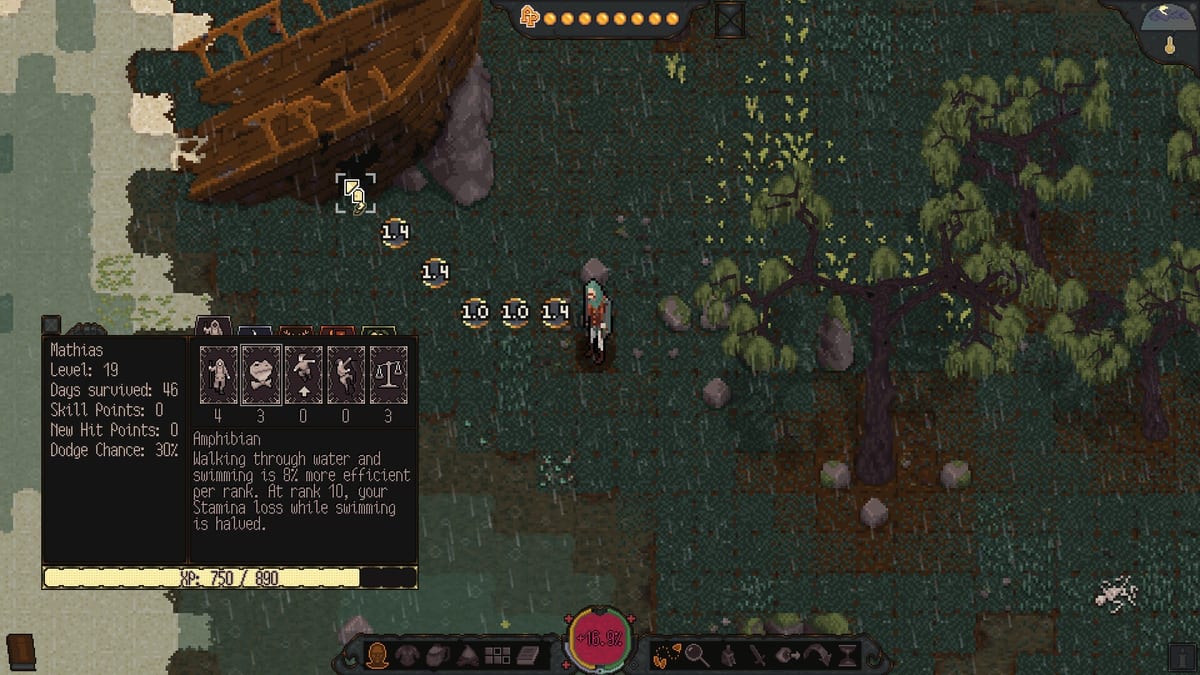
Crafting and gear choices in Mirklurk: Every Step Matters are never just “higher number equals better.” The swamp taxes Warmth, climbing, Action Points, and inventory honesty. A kit that wins a grid fight can still kill you on the walk home. This guide explains how to think about items, skills, armor tradeoffs, weapons as shapes, and trading so your craft decisions support the whole exile loop.
Crafting is survival logistics
Every crafted or scavenged item should answer a job:
- Feed Hunger without wrecking inventory space.
- Enable fire and light for nights covered in Camping.
- Provide a weapon pattern that matches common early enemy grids in Combat.
- Protect HP cells without destroying Warmth and mobility.
- Convert surplus into missing pieces through merchants.
If an item does none of these jobs, stash it or sell it. The Mirk punishes museums on your back.
Skills that change what you can make and find
Progression leans on practical skills such as:
- Foraging — stabilizes food income and wild materials.
- Brewing — opens utility and status-oriented preparations as systems allow.
- Hunting — ties combat success to food and component drops.
- Exploring — reduces wasted AP on empty wandering and helps locate handcrafted value.
- Trading — improves how efficiently surplus becomes the exact tool you lack.
You do not need max everything on day one. Early exiles should prioritize whatever closes their worst loop failure: usually food reliability, fire materials, or a coherent weapon pair. Early Game Tips helps pick those priorities under pressure.
Weapons are tools with geometry
When you craft or choose weapons, evaluate pattern and damage class before raw intimidation:
- Force weapons (often axes) that can affect adjacent cells help messy boards.
- Piercing options punish armor-heavy foes.
- Bleed wants directional discipline.
- Poison accepts randomness to pressure leftovers.
Carry at least two different shapes when you can. Mid-fight swaps cost AP but save runs when the enemy’s remaining HP cells no longer match your opener. Crafting a “second shape” is often smarter than upgrading a single beloved stick.
Armor and clothing tradeoffs
Steel armor is the classic example: strong for combat, awkward for climbing and Warmth. That tradeoff is the design thesis of Mirklurk loadouts. Wear steel when you expect a fight you cannot avoid. Travel lighter when the day’s job is scavenging, slope traversal, or long merchant walks.
Practical armor policy:
- Store heavy combat kits in a stash chest at camp.
- Equip them at the edge of known danger—dungeon mouths, aggressive routes, scripted threats.
- Swap back before night marches if Warmth is already strained.
- Never assume the best fight armor is the best life armor.
Defensive gear also feeds into armor-point placement philosophy: more protection can mean more turns to place and exploit patterns, but only if you can afford the movement and temperature costs outside the scrap.
Materials: fuel, stones, food science, light
Not all crafting is weapons. The quiet crafts keep you alive:
- Wood processing — wet to dry pipelines near fires.
- Camp components — stones and fire setup pieces.
- Food prep — turning risky scraps into steadier Hunger solutions.
- Light sources — torches and related materials for night and dungeon dark.
These crafts fail when Focus is trashed. Do precision work when Well-being is stable; see Survival. Accidents during firecraft are expensive because they steal the evening.
Inventory architecture
Build three mental kits:
- Travel kit — food, light, basic weapon, minimal armor, navigation brain.
- Fight kit — pattern weapons, armor set, consumables, no junk.
- Camp kit — stones, fuel plan, stash organization, repair/replace priorities.
Move items between kits using chests. Crafting decisions should fill gaps in these kits, not create a fourth pile of “maybe later” trophies.
Weight and slot pressure also interact with AP economy: overloaded travel makes every slope more miserable. Controls reminds you that slopes already cost extra AP—gear should not multiply that tax without reason.
Trading as crafting by other means
Merchants and barter turn exploration surplus into crafted readiness. Sell duplicate patterns, excess scrap, and vanity loot. Buy the boring missing piece: dry food, torch fuel, a stone shortfall, warmer clothing, or a weapon class you cannot craft yet.
Trading skill makes this conversion less painful. Even without deep trading investment, visiting handcrafted survivor or merchant locations on a schedule prevents craft bottlenecks. Procedural terrain changes the path; the need for a conversion stop does not.
Dungeons, ruins, and specialized kits
Dark caves and ruins want light, compact food, and weapons that handle cramped threat patterns. Do not bring your entire stash. Craft or pack a dungeon kit, leave from a stocked camp, and plan the return fire. Getting lost in darkness is a survival failure as much as a combat failure.
If magic-oriented tools appear in your progression—some drain Warmth or Focus as a resource—craft around the recovery cost. A brilliant orb that freezes you to death on the walk back is not a brilliant orb.
Example tradeoff scenarios
- You found steel and a cozy cloak. Keep both; wear steel for the known troll-adjacent route, cloak for the rainy night return.
- You can craft a high Force axe or a precise secondary knife. Make the knife if you already swing Force; diversify shapes.
- You have rare components for a flashy weapon but no stones. Stones first. Dead exiles do not flex.
- Merchant offers food bundles versus cosmetic junk. Buy calories until Hunger anxiety is gone for two days.
Closing mindset
Crafting in The Mirk is systems design on your character sheet. Every item should earn its AP, its Warmth cost, and its stash slot. Cross-link your craft plan with Getting Started for the first loop, then refine through camping and combat feedback after each death.
When gear, skills, and trades all point at the same daily plan—eat, dry, stash, fight only on purpose—Every Step Matters stops feeling like random cruelty and starts feeling like engineering under pressure.
Frequently Asked Questions
Quick answers for surviving The Mirk.
Is heavier armor always better in Mirklurk?
No. Steel and heavy kits can excel in combat yet punish climbing and Warmth. Swap loadouts for travel versus known fights.
Which skills should I prioritize first?
Prioritize whatever fixes your current death loop—often foraging for food, then camp materials, then combat pattern tools. Trading helps convert surplus later.
Should I craft one great weapon or several?
Prefer at least two different attack shapes and damage classes so you can adapt to enemy HP grids without wasting AP on poor overlaps.
What should I sell to merchants?
Sell duplicates and vanity loot. Buy missing survival pieces: food, fuel, stones, warmer clothes, or a weapon class you lack.
How does crafting connect to camping?
Camp crafts and materials—stones, dry wood pipelines, light—keep nights survivable. Weapon crafts mean little if you freeze after the fight.